


Squalor & unsanitary housing
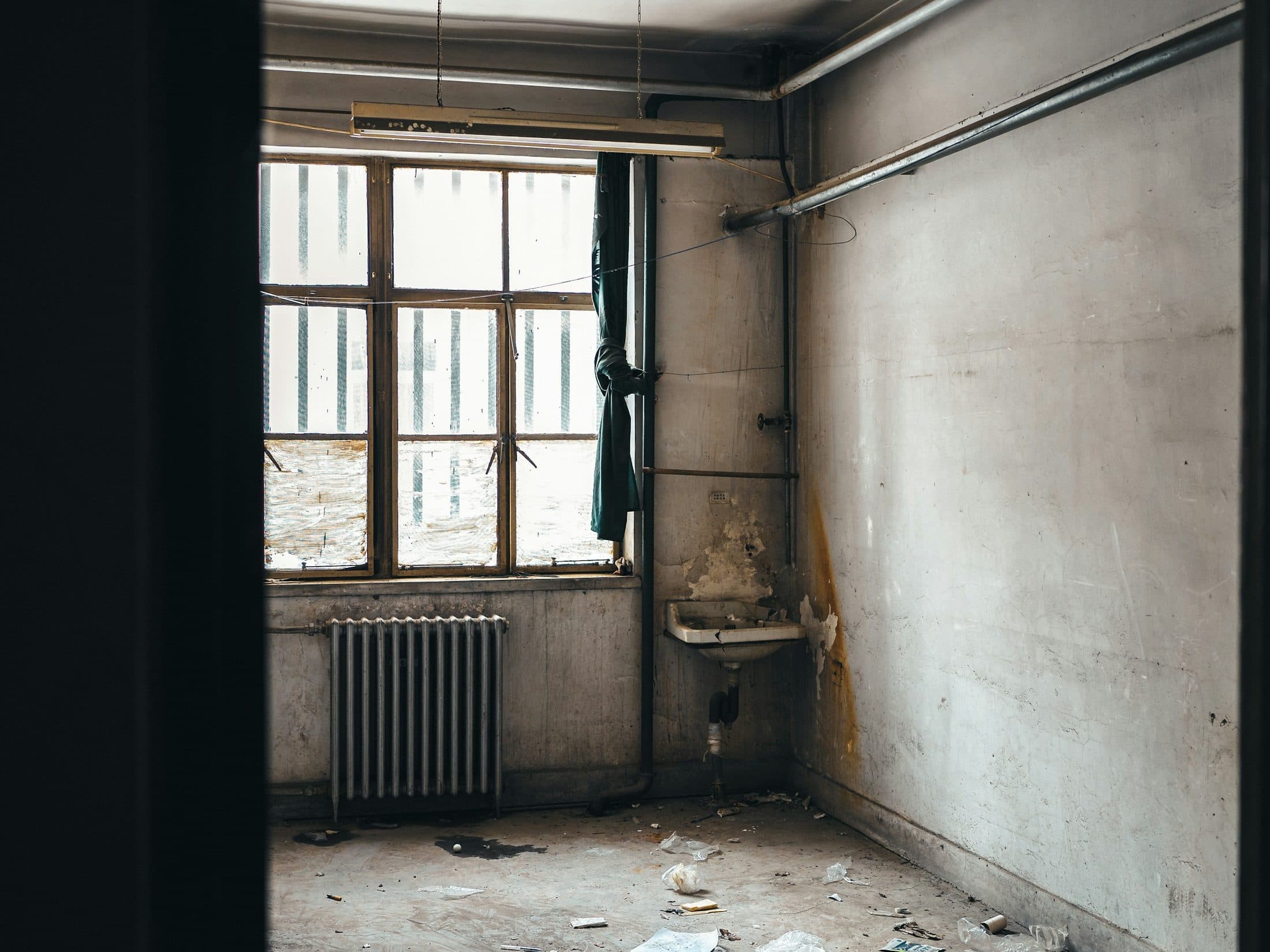
Neglect settles in quietly: the housework stops, the waste stays, damp and odours do the rest. When the home becomes a risk to its occupants or the building, a complete reset is needed.
The reset
Remove, decontaminate, clear the air
The first phase removes what contaminates: accumulated household waste, expired food, unsalvageable textiles and bedding, in sealed bags towards the right channels. That is usually when the home reveals its true state — hidden damage, pests, mould.
Decontamination then treats every surface: floors scraped then washed and disinfected, walls washed down, bathroom and kitchen retaken to the traps, which concentrate the bacterial pockets. The protective gear is no theatre: an unsanitary home genuinely exposes.
Clearing the air concludes: prolonged ventilation, treatment of embedded odours, humidity checked. Depending on the goal — re-occupation, re-letting, sale — we adjust the finish, and honestly flag what belongs to building work: blistered paint does not clean off.
This kind of job is ordered by landlords recovering a property, managing agents dealing with a flat that threatens the building's hygiene, heirs, guardians or families. Every situation is different: the assessment visit measures the scale of the job, identifies the risks — pests, waste to remove, damp — and leads to a fixed-price quote broken down by phase.
The team arrives equipped and with its own products; discretion towards the neighbours is part of the method. For a first contact, a call or a few photos via WhatsApp are enough to arrange the visit.
Unsanitary homes: typical situations
Yes, with the occupant's consent or within an ongoing procedure: we then work alongside the social worker or the authorities. Without a clear framework we decline — which protects everyone.
Make the home liveable, again
Photos or an assessment visit: the quote separates removal, decontamination and finishing.