



Cleaning after water damage
A leak, a burst pipe, the flat upstairs, a Cévennes storm: the water is gone, the damage begins. The first 48 hours decide almost everything — mould included.
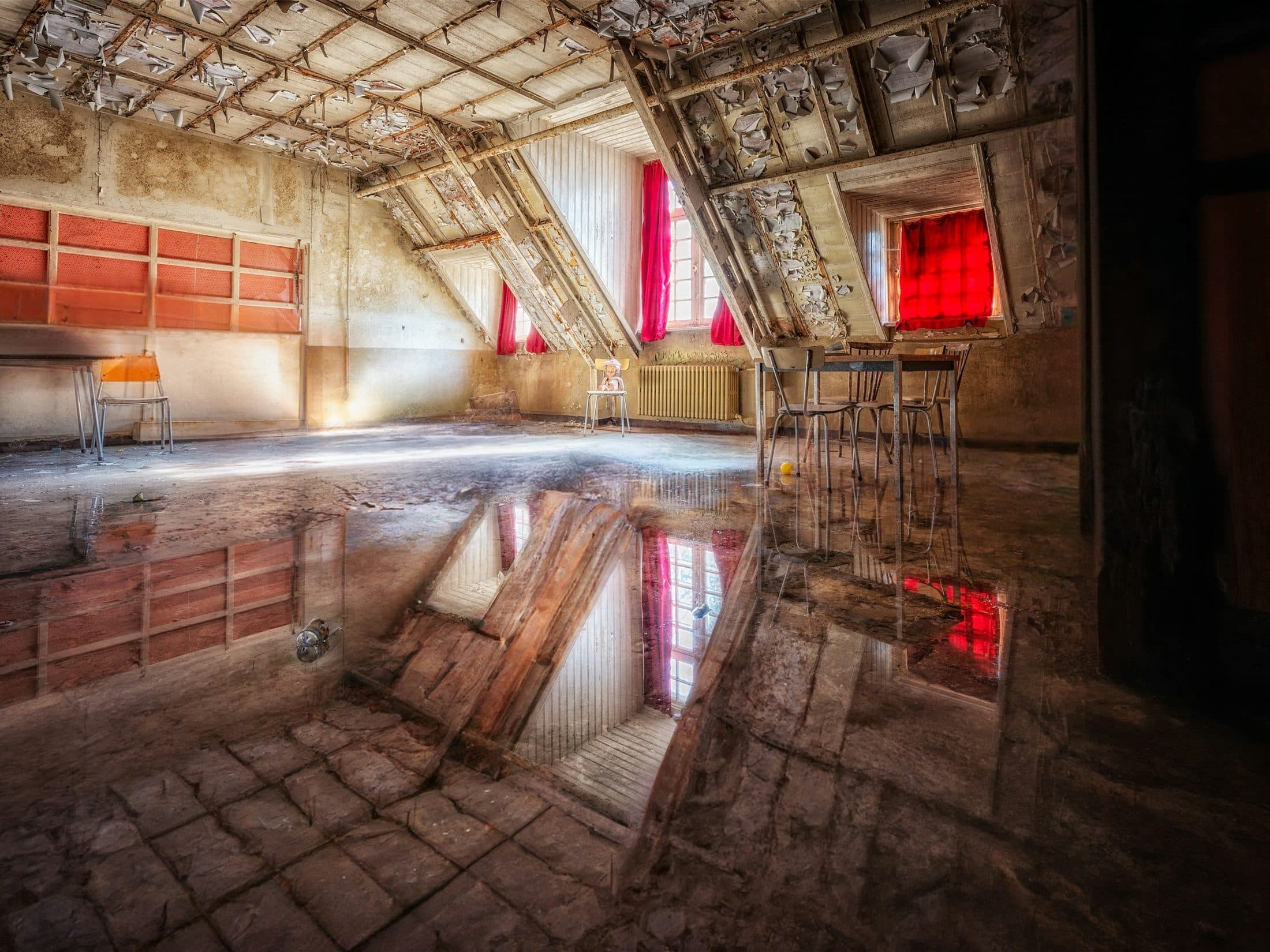
The 48 hours
Remove, sanitise, dry — in that order
First get the water out: pumping or wet-vacuuming of pools and soaked zones, drenched textiles removed, furniture raised or moved. If the water came from sewers or an outside flood, it is contaminated by nature — cleaning becomes disinfection, systematically.
Then sanitise: silt and deposits removed, floors and wall bases washed then disinfected, skirting removed where water got behind, unsalvageable materials — soaked carpets, wet insulation — disposed of with the insurer's consent, photos in support.
Finally dry, properly: residual moisture in screeds and partitions does not evaporate on its own in the wet season. Our dehumidifiers take over — the drying page details that follow-up through to the final readings.
Water damage: the right reflexes
Cut the source if possible, cut power to the wet zones, raise what can be raised, photograph before moving — and do not blast the heating "to dry": that feeds the mould. The rest is on us.
48 hours to change everything
The line answers day and night: describe the situation, we arrive equipped.